

A display deathmatch - should you buy a gaming TV or gaming monitor? - balesvilly1962
A display deathmatch - should you buy a gaming TV or gambling monitor?
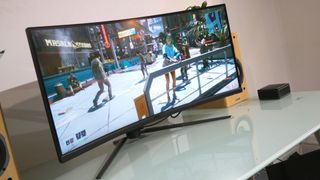
Love gaming? You absolutely need a good display. But make out you want, or need, the best gambling monitor operating theater the topper gaming TV? Now that's a tough interrogative sentence. In days of honest-to-goodness, deep in the mists of the '90s and '00s, the answer was acuminate: if you're playing on the best gaming PC, you go a monitor. For solace? That'll cost a TV.
Just IT's no longer so clear-cut. Some of the latest TVs suffer gaming-central features that make them a peachy fit for a certain kind of PC gaming. And the Xbox Series X and PS5 also both work better with leastwise just about play monitors than any previous contemporaries of gaming boxes - and there are new heights in gaming TVs, more often than not, as the best TVs for PS5 and Xbox Serial X evince.
Long-acting write up short: both TVs and monitors can buoy now be a great go for either PC or console gaming. The catch? That of necessity qualifying, as IT doesn't apply universally. But that's incisively what we're here to investigate. When and why, exactly, should you choose a monitor lizard or a Television for gaming?
Expiration big with a gaming TV
Gaming TVs
Best for: Most types of soothe and big-screen PC gaming; merely not serious esports on the PC.
Pros:
- Tiptop HDR performance
- OLED tech is super speedy
- 120Hz refresh and adaptive sync are now acquirable
Cons:
- Quite expensive in the ideal spec
- Subpixel payout can be problematic on PC
- Sheer size is not forever paragon for PC use
Big, stupid, and almost certainly dull - so it ill-used to go for early unqualified-panel TVs. Sure, you got a much larger screen than most monitors, but the resolution was low, the picture element reply was insufficient, and the input lag? In a Holy Writ, prolonged.
For a certain rather mainstream console gaming, that was fine - all you sought was a big, bold screen out for lively around in your Mario Kart. And, anyway, your console table didn't sustenanc Microcomputer-mode high resolutions. Simply directly consoles like the Xbox Series X and Sony PlayStation 5 are much more tightened in price of resolve, refresh rates, and the rest, while console gaming has swollen to include genres that in play and give out on latency, like competing online shooters.
Merrily, late TV technology has unbroken those original characteristics. For starters, 4K or 3840 x 2160 pixel indigenous resolution is pretty practically the average, even connected budget sets. Just as eminent, the big brands like LG and Samsung now pay off attention to issues like input lag, which accustomed be so debilitating to responsive gaming on old TVs.
What's Sir Thomas More, OLED technology is now widely free in the TV market and the best OLED TVs are more inexpensive than ever. That matters because OLED panels birth inherently superlative pixel response to any LCD monitor. Grey-to-grey pixel response, the most commonly quoted assess, is sub-1ms for an OLED. Full on-off response is in the region of 1-2ms. Full on-off response for a modern gambling LCD panel? Anywhere from 5ms to 15ms. OLED is far faster.
Rounding out the most prodigious gaming-relevant advances, you can directly get TVs with trustworthy 120Hz refresh support, including at 4K, adaptive refresh, and the all-important HDMI 2.1 interface. These form the best 4K 120Hz TVs currently going and the HDMI 2.1 is unexpendable for hitting high resolutions and refresh rates, at the same time, a capability that defines the a la mode generation of consoles.
The go-to example hither is LG's C Series OLED, including the LG 110 from 2020 and this yr's updated LG OLED C1 and LG OLED G1. You generate 4K settlement, 120Hz review, HDMI 2.1, adaptive refresh, and low latency, plus all the usual benefits of OLED tech including essentially space contrast and that uber-fast pixel response.
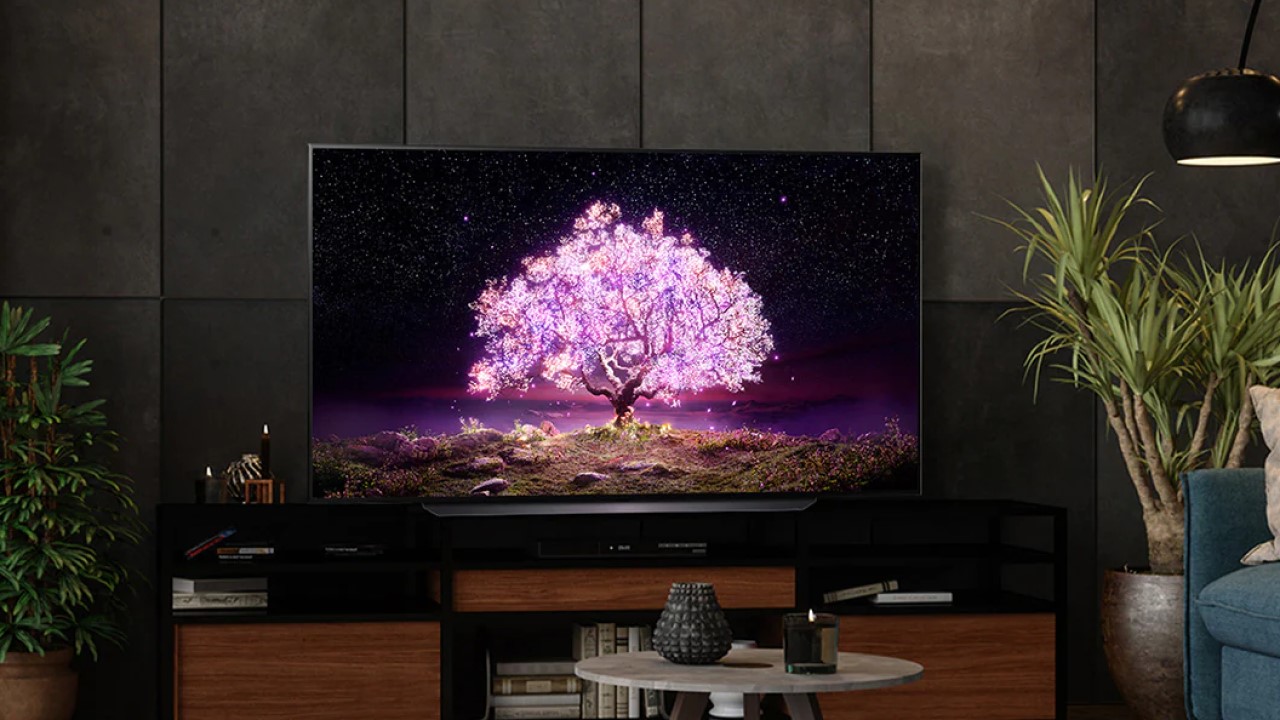
Fire up a graphics masterpiece equivalent Cyberpunk 2077 on a high-end gaming PC, and it wish front utterly stunning connected an LG C Series. The same goes for solace gaming: Dirt 5 operating room Forza Horizon 4 on, articulate, a 55-inch C Series leave blow your mind. Frankly, everything looks great, scheme titles connected PC look-alike the Total War franchise, epic RPG adventures like Assassin's Creed Valhalla, the hatful.
One caution is when it comes to pricing: you can get 48 and 55-inch versions of the CX for just about $1,300 / £1,100 (at meter of composition). Not exactly budget pricing, just as a semipermanent investment funds, arguably beautiful reasonable - particularly given that information technology'll likely constitute used in other slipway too for home entertainment.
But, at that place are limitations, naturally. TVs pass unsuccessful at 120Hz for true refresh rates, so Don't comprise fooled by sets claiming 240Hz or similar (this typically involves frame interpolation technology and not actually updating the epitome at 240Hz). In the meantime, gaming monitors continual adequate 360Hz can now be readily bought. For esports, the higher the refresh, the healthier. However, that's arguably most relevant for PC. After each, even the latest consoles top stunned at 120Hz, so you'll get no benefit therein regard from teaming 1 of them with a faster monitor.
It's also worth noting that if you want the very optimum in HDR performance from a TV, you have a tricky choice. OLED panels have far superior sarcastic levels and contrast, merely the better QLED TVs corresponding the Samsung QN95A offer more better brightness and equally a consequence also offer advisable particular in brighter HDR scenes. Currently, there is no one panel tech that's better for HDR across the board. For that, we'll have to wait for micro-LED panels to become affordable.
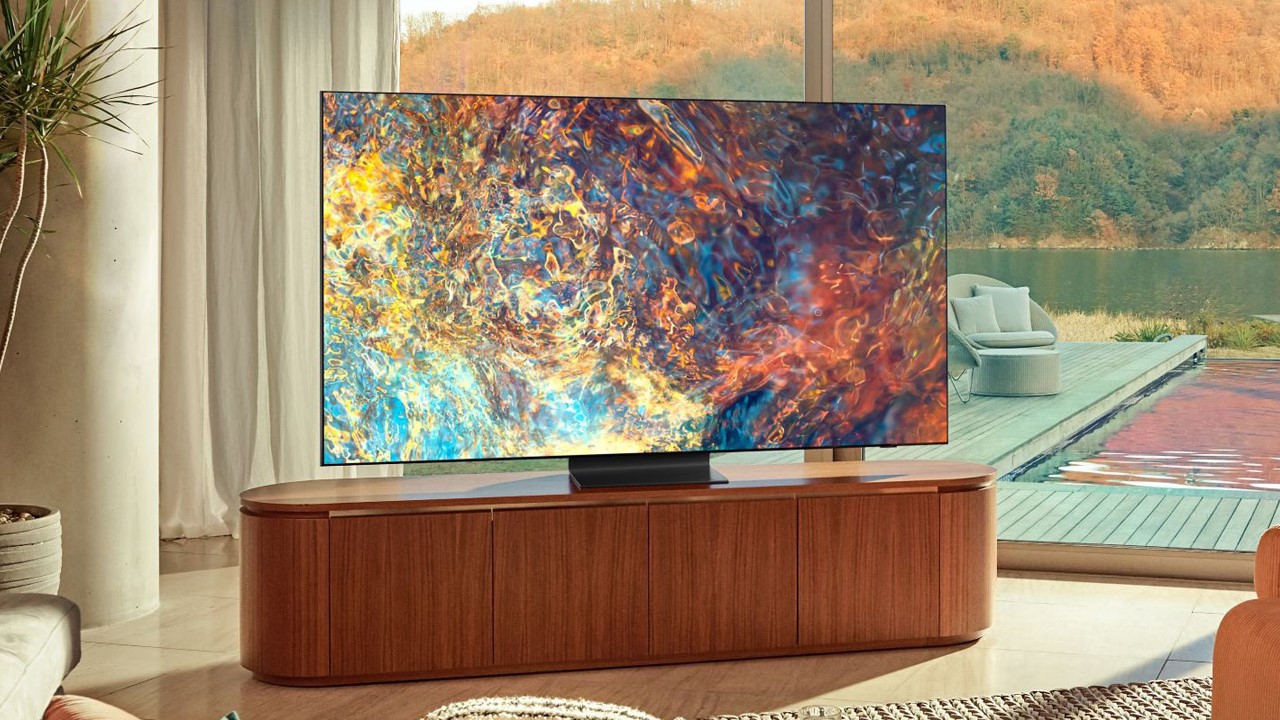
The final emerge regarding a TV as a PC gaming monitor is sheer size of it: 50-inch plus sounds great, but it's non hugely engineering Eastern Samoa a desktop monitor. Similarly, the bigger the set, the bigger the pixels. Sure, you could go 8K and quadruple your picture element density. But good luck finding a GPU even among the very second-best artwork cards that testament beryllium fit to play the latest games smoothly at 8K.
Anyway, a suitably specific TV makes for a fabulous console table gaming panel and an excellent screen for larger-screen PC play. Just father't assume IT's going to be ideal as an all-around PC monitor, some issues remain.
Play monitors - no more longer the realm of the Microcomputer-only players
Gaming TVs
Best for: Esports and performance-sensitive gaming, plus all-round PC custom and wherever blank space is at a premium.
Pros:
- Available with super-high refresh rates and low latency
- Better tantrum for desktop gaming
- Prime peak brightness to OLED TVs
Cons:
- LCD tech still baffling for pixel response
- Costly for the sizing of screen you get
- Few monitors offer true HDR performance
In that location's a terrifying set out of options and choices when it comes to the outflank monitors for gaming today. Big, small, ultrawide, uber curved, crazy review rates, funky backlight technologies, confusing performance claims. How do you add up of information technology all? There are and so many stand in-categories of monitors for gaming now, it can be erect to voyage to the topper one for you.
One thing to be aware of is that ultrawide aspect ratios are currently problematic for even consoles, and yes that includes the very latest Xbox Series X and PS5. Future updates are expected to begin to bring wider support for assorted resolutions and look ratios. But for now, 1080p and 4K monitors for gambling are guaranteed to work with the PS5, while the Xbox adds 16:9-aspect 1440p sustenanc. That's a pity when there are fabulous ultrawide monitors like the MSI MPG Artymis 343CQR and the Samsung Odyssey G9 to pick out from.
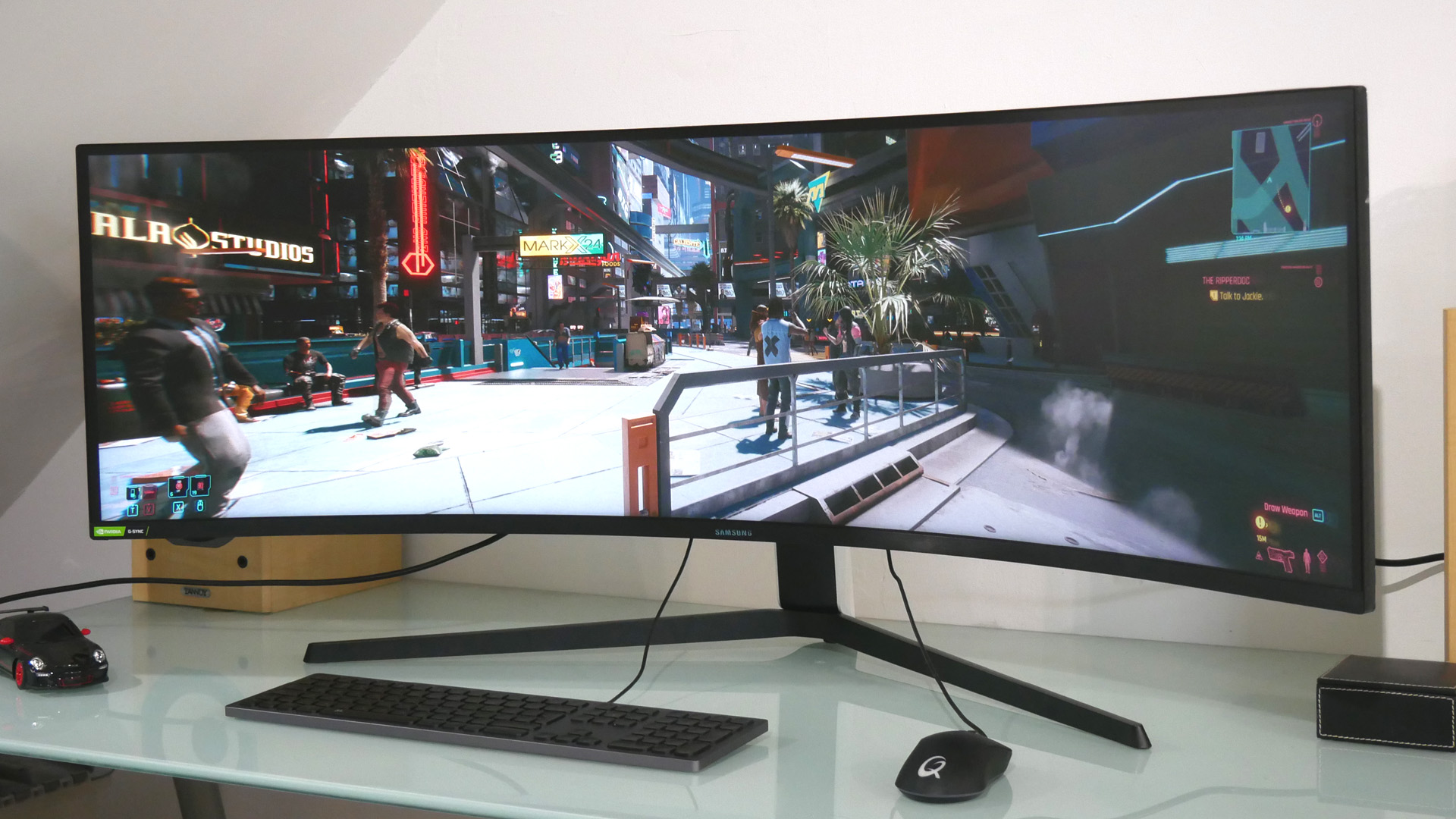
With that proviso dealt with, the freshman thing to understand about gaming monitors is that they're jolly much all LCD-based. The term 'LED monitor' typically refers to an LCD monitor with an LED backlight. But not entirely Light-emitting diode backlights are equal. Not-HDR (otherwise best-known as SDR or standard dynamic range) monitors have monolithic backlights, patc much HDR monitors have local dimming, allowing granular brightness control crossways the empanel. The problem is that many local dimming implementations are so crude - perhaps as few as eight to 16 dimming zones - as to be pointless. Even the latest mini-LED backlights on megabucks monitors like the ASUS ROG Western fence lizard PG32UQX simply possess a thousand some zones. A 4K OLED TV in effect has eight million zones - each pixel is a fully controllable fluorescent source. Put simply, there are few monitors currently available that can render a true HDR epitome. LED backlights are great at showing truly bright scenes, just poor at mixing bright and dark elements in a unwed image - which is in the end what HDR is all about.
Pixel response is another tricky area. Two monitors both rated at 1ms can have quite diverse pixel response due to the erratic methods used to measure performance. A skilled example is the ASUS ROG Genus Strix XG43UQ. IT's rated at 1ms just has poor response in the sincere world. Perform your due diligence on any board you are considering; e.g., search reviews on GamesRadar and our sister websites.
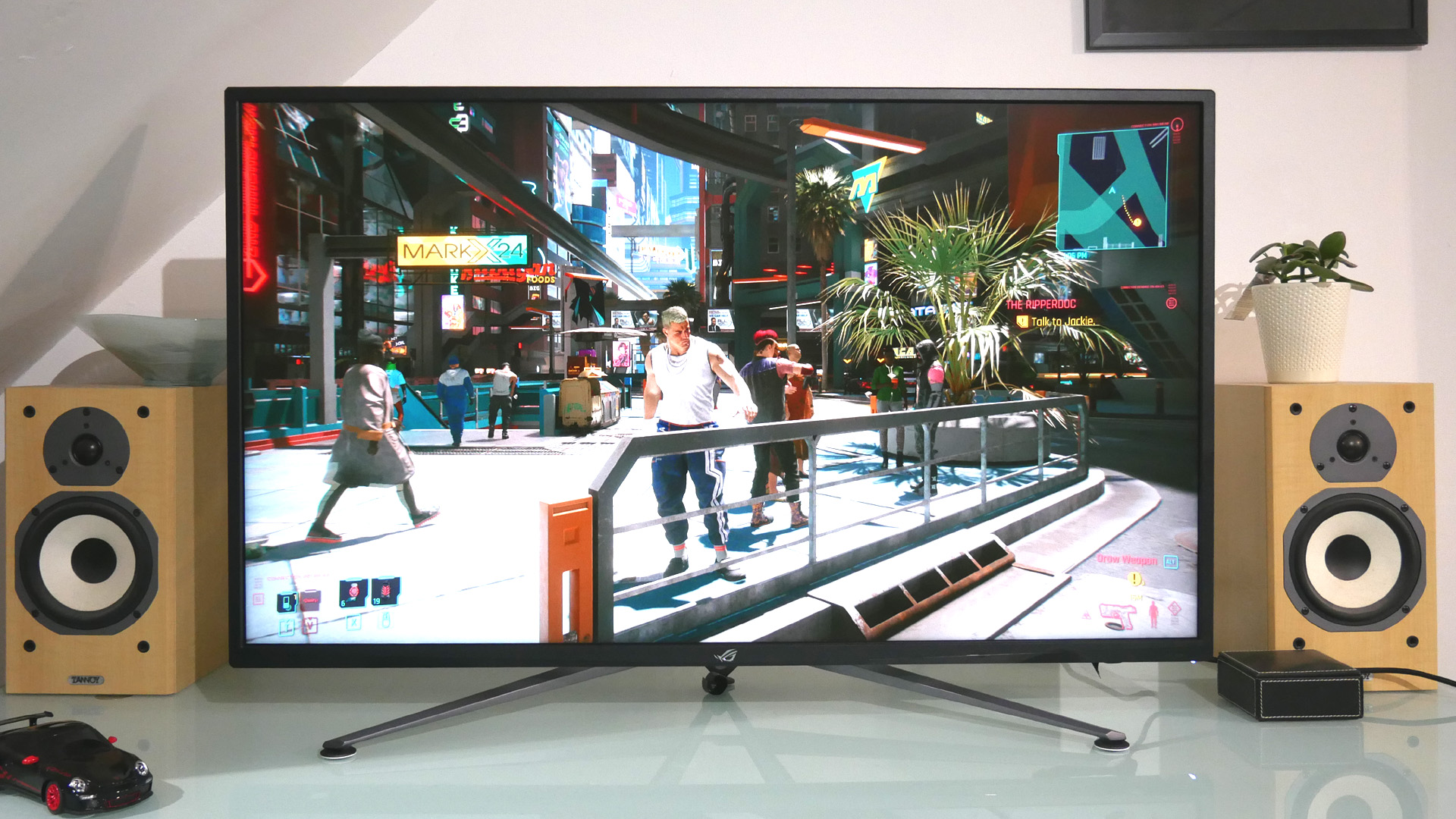
Another issue to be aware of is connectivity. To gambling games at 4K and 120Hz on the fashionable consoles, HDMI 2.1 is essential, but it's only just beginning to look on a handful of gambling monitors. Most high freshen up 4K gaming monitors only accept HDMI 2.0 and are limited to 60Hz connected that interface. They'll exclusive get along the high refresh numbers via DisplayPort, which is just keen for PC, but not very much economic consumption with a console table - and so you'll have to be careful to spot this when looking for a PS5 reminder or Xbox Serial X monitor in the future (PS4 monitor shoppers need worry not).
Speaking of refresh rates, that's one area where monitors have a really clear reward. Where TVs top side out at 120Hz, numerous monitors running at 144Hz, 165Hz, 240Hz, and even off 360Hz are on hand. In extremis, quicker refresh makes for lower latency. That rump issue in really agonistic esports like online shooters where get down rotational latency can allow you to get your shot in fractionally before the opposition. Something that gaming monitors do have the butt against on here is G-Sync. This tech helps to align your Microcomputer, the game, and your display to ensure there's no screen tearing when the Hertz are busting the numbers - if this is critical to you so you'll need to aim for the best G-Sync monitors and the best G-Sync compatible FreeSync monitors. (Though this is now coming into court in some LG TVs which is a great bonus for the big screens.)
Put simply, if you want to own the resistance in Apex Legends or Counter-Strike on the PC, you need a fast monitor. For console esports, not so much. After wholly, no console will movement some monitor beyond 120Hz, so paying for a high refresh than that makes little sense.
Size of it and shape is other important factor. For desktop utilization, bigger isn't forever healthier. What's more, a smaller panel with the duplicate 4K firmness of purpose as a big TV makes for card sharp images. Monitors are also available in a wider prize of aspect ratios. If you want that envelop-around feel of an ultra-wide curved gaming monitor, then a Microcomputer-fist screen can exclusive deliver this.
So what's it to be?
So, you've got the readies. You're astir to buy a new riddle. But what do you accept?
As a console gamer, information technology's crucial to be aware that many features on the latest gaming monitors are either mutually exclusive or suboptimal. 360Hz? Digressive for consoles. Ultra-wide aspect ratios and unconventional resolutions? Not decently suspended. Likewise, some combinations of features and specs can be very expensive in a gaming monitor context. Try buying a 4K monitor with 120Hz support, HDMI 2.1, and HDR support with proper local dimming. You'll pay as much for a puny 27-edge in or 32-inch monitor with those features as a likewise sure-footed 50-edge in plus TV. Then again, pick out sagely and you sack have, read, a compact high brush up 1080p cheap gaming monitor corresponding the AOC G2490VX for a fraction of the cost of whatever 120Hz Television set. But, generally, you get more bang for your console play buck from a TV.
For PC gamers, it's not bad to have both options. If you want big-riddle gambling fun, a Idiot box posterior really make sense. The same goes if HDR execution is a big deal for you. TVs generally arrange HDR often better than monitors. Just be cognizant that TVs still don't make for great comprehensive desktop monitors. Likewise, if you have identical specific needs and preferences, such as uber low latency for esports, or prefer ultra-wide aspect ratios for that added immersion, and so information technology has to be a gaming reminder.
Your retail merchant options are anything but a couple of and ALIR between for TVs and monitors, so here are close to quick links to get you going:
US gaming TVs: Amazon | Best Buy | Walmart
U.S. gaming monitors: Amazon River | Best Buy | Newegg | Walmart
Great Britain gaming TVs: Amazon | Currys | John Lewis | ebuyer | Box
UK gaming monitors: Amazon River | Currys | ebuyer | Overclockers | Loge

Source: https://www.gamesradar.com/gaming-tvs-vs-gaming-monitors/
Posted by: balesvilly1962.blogspot.com
0 Response to "A display deathmatch - should you buy a gaming TV or gaming monitor? - balesvilly1962"
Post a Comment